


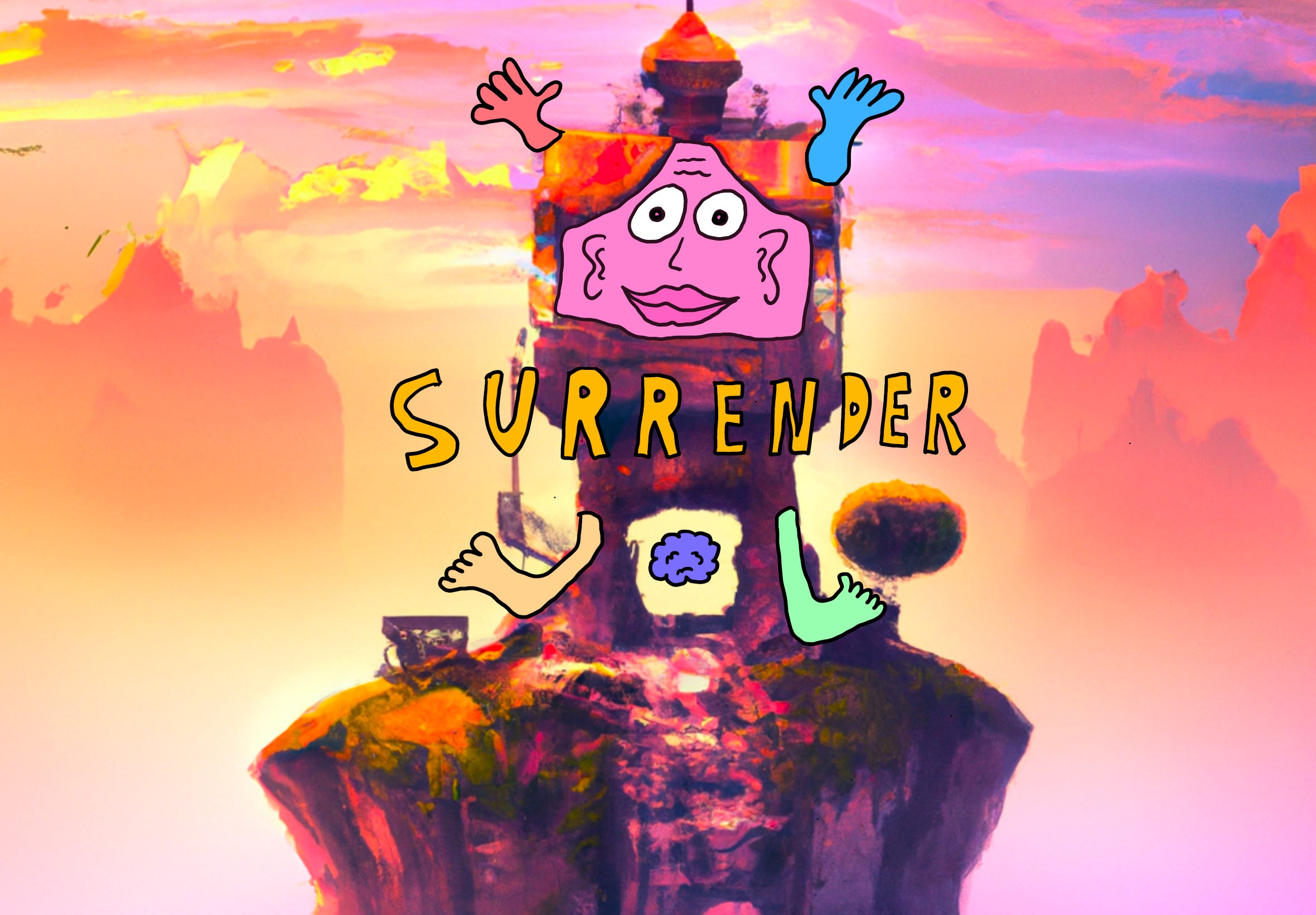
ACT 1: A FLUSTERED MIND
I went to yoga this morning, after several days absent thanks to food poisoning. Dose two in a four week period in fact. It was bad. Vomiting in the shower while I tried to ease the body aches bad. Eating an entire box of black charcoal to soak up the toxins in my gut bad. Thinking of cutting off my left earlobe if it meant the vomiting would stop bad.
It feels good to be alive again. It feels good to be able to walk again without fear of collapsing. It feels good to sense the flickering warmth of sunshine through the ever-moving clouds. It feels good to have the mental capacity and energy to spew literary masturbations onto the digital page with a healthy concoction of hyperbole and irony.
Anyway…
A dog tried to bite me on the way to yoga this morning. I think my radiating peaceful aura protected me from his vicious fangs and rabid rage. Or maybe he was just hungry and left me alone when he realised I didn’t have any food? Either way I arrived at yoga with a sense of groundedness that I had been missing in my few days spent coiled up in a shivering ball of sweat and self-pity. I made a jasmine tea and chatted to the receptionist. I know her name but it just isn’t coming to me right now. Does that make me a bad person? She did have to ask me for mine a couple of times before she remembered it. Though that was over a week ago. Is it too late to ask for her name? Shit. I spilt the hot water on the floor and on my foot. I guess that is what they call karma. I hobbled (an exaggeration) down to the bamboo classroom. I sprayed locally made (That’s right, I’m not out here supporting no international conglomerates) insect repellent across my extremities. The mosquitos have been swarming down by the river recently, I’ve probably lost half a litre of blood already this morning (another exaggeration).
Anyway…
I sat down at my mat and did some warm up stretches. My mind wandered. My hips were TIGHT. Are they normally this tight? Definitely not. Have I pulled something? Do I need to pee. Should I pee. Shit, everyone is coming down to class now. It’s too late. I shouldn’t have had so much tea. Why can’t we normalise nappies for adults? Right, because they’re gross and we have perfectly operating things called toilets. Is that a bee? Do wasps like bees? Can they communicate with one another or are they speaking different languages? Are they even conscious of the idea of languages? Is consciousness even an appropriate word to be using in relation to insects. My back hurts. Namaste. Right, class has started, here we go.
ACT 2: A BRIEF RECOUNT OF TODAY’S YOGA CLASS
All in all, I would say it was a challenging yet enjoyable class and once I settled, my mind I found a lot of discoveries both within my body and in the feedback from Ketut (my teacher). This is how I remember class playing out:
Meditation (Ahhhh my mind is letting go…I remember this)
Warm up (My body is tight but I will breathe through it)
Ketut thinks he hears a snake. He says he is scared of snakes because one time during a class one slithered up from behind him. I could relate to the feeling. He decides it wasn’t a snake and we begin our flow.
Ketut pushes the class harder than usual.
Through my exhalations I find my body releasing deeper and deeper into the positions. I notice my improvements. I let go of any judgements on the way my body “should” be moving or feeling.
Ketut drops some deep wisdom that resonates through me with the sharpness of that thumbtack I sat on when I was seven (More on that wisdom shortly).
We release into a relaxation meditation.
ACT 3: SURRENDERING INTO THE EXPERIENCE OF BEING
I leave class lighter than when I entered. My mind calmer and more centered. I am not reactively thinking about my experience of being but actively surrendering into the experience of being. How do you actively surrender? That sounds like a contradiction. Isn’t the idea of surrendering to “let go”? I believe this contradiction stems from our mischaracterisation of the word “surrender”. Surrender is not simply about some esoteric idea of letting go, it is an active and conscious process through which we practice relinquishing our steadfast relationship with control. Brian Eno, a world-renowned musical artist, promotes the idea that “surrender” should be seen as an “active-verb”., and by that he means that surrendering “is not just you being escapist; it's an active choice [that you make.”
When I went into my yoga class this morning I was stuck in my mind. My mind was controlling my relationship with the world around me by constantly trying to articulate thoughts and reactively process the sensations of my senses. My very way of being was one of controlling the external world by constantly attempting to comprehend it through thought. I see this. What is that? That makes me think this. What’s that thing. Oh I feel this…
It’s a never ending cycle of a very human experience that the Buddhist texts refer to as Papancha or Conceptual Proliferation. There’s a whole litany of ideas and definitions of this experience but from my understanding it reflects what most of us would recognise as a “chattery mind”. Our mind is overpowering our experience of the world with rapid thoughts in an attempt to comprehend and thereby control our simultaneously simple yet complex existence. Within our design there appears to be a powerful allure towards this internal chaos. Chaos can be comfortable because chaos can be controlled, or at the very least we can convince ourselves of “control”. Surrendering isn’t so much about actively controlling the mind, but becoming conscious of our minds tendency towards “controlled” chaos
Through this morning’s yoga class, and many of my classes before this, the most profound takeaway I have experienced is my letting go of or surrendering beneath my chattery mind. I recognise that the chattering is occurring and that it is an attempt at controlling my experience, and instead of fighting it, I breathe through it and slowly shift my focus towards my practice. I actively surrender into my yoga practice which then provides me with the dedicated time and space to delve deeper beneath the chatter. It is not something that “just happens”, but something that is achieved through the action of yoga practice and my very conscious decision to surrender into the flow of my breath and body. Of course, there are a myriad of practices from meditation to breath work, to physical exertion that help achieve this state of surrender, but all of them require a very conscious choice to shift focus away from the “controlled” chaos and into a more free, spacious state of awareness. Like a muscle the more we practice and the more diverse ways in which we lift our focus up to lower down into states of surrender, the stronger and easier our surrendering will be. In understanding this, It’s possible that surrender is not just an “active-verb” but a process through which we learn to relinquish our controlling, chattery mind and find spaciousness in our awareness of our internal and external worlds.
BONUS ACT: EXPANDING ON THIS IDEA THROUGH KETUT’S WISDOM DROP OF THE DAY
Interestingly, this process of thought ties in quiet nicely with some of Ketut’s wisdom from today. At a small break in our flow he spoke about the relationship between the mind and the face. Whenever anything in our physical practice of yoga gets hard, our tendency is to tighten up our face, which in turn tightens up our breathing and our body. This is all in response to our minds decision to define the experience as “painful”, “difficult”, “uncomfortable”. Ketut encourages all of his students to smile throughout their practice, especially when positions become “hard”. The smile on our face challenges the mind’s categorisation of our experience and encourages our breath to remain consistent.
Naturally, this expands out of the yoga studio and into life. You can learn a lot about someone from their face, their expression and whether they are holding tension or calmness. It’s why so many of the great performance cultures throughout history have leveraged facial expression as one of the most powerful tools in communicating emotion to the audience. It’s why there are so many Close Ups in films, and why masks have manifested in diverse cultures across the globe. The face is the pathway to the mind and ultimately down into the soul.
Anytime that we experience stress, fear, anger or frustration, our face is going to be the first signal to the outside world. But what if we were to challenge this? What if we were able to become consciously aware of this relationship between the mind and face and instead project a smile. It might not start as authentic, but eventually our breathing will change, and our body may even start to relax. From here the attachment to these so-called “negative” emotions will weaken, and the smile might actually feel more natural and honest than what they are counteracting.
Part of the process of surrender is the releasing of judgement (within the mind) and of tension (within the body). Our faces are the signal of this. If we hold onto our judgements and excessive thoughts our face will reflect this. How many people do you see walking down the street with furrowed brows and concerned mouths? There faces are articulating their attempts to control the chaos of their mind. Our internal tensions are always going to manifest within and through our body. We can use this psychosomatic connection as a tool in assessing our own states of surrender and control. We can work to become more conscious of how our body is articulating our internal state and whether we are living in the state that best serves us. By simply checking in with ourselves and shifting our awareness to our body we have the ability to then change our mental state and vice versa.
There are obviously various writings and methodologies through which this understanding is articulated, and hundreds if not thousands of ways you can apply it to your life. In its simplest form I think the goal of understanding this relationship between mind, body and spirit, is to develop a deeper relationship with yourself (most importantly the “I” that sits behind the mind, body and outward facing “identity”). By becoming aware of these ideas in practice and learning to curate our own moments of surrender we start to learn our habitual pathways of control, our tendencies of tension and the tools that we can employ to release beneath the chattery mind. It’s different for everyone and this is by no means an attempt at prescribing something for everyone, but I think these realisations touch on something universally applicable and the very least something interesting about our design as human beings. I hope this wandering through ideas wasn’t two disconnected, and you found some value in this exploration. I will continue to interrogate these thoughts and explore new ways of simplifying and expanding upon this articulation now and into the future.
Thanks for reading!
Stay Weird,
Zed